
Packaging for Small Business: How to Look Established Without Overspending
-
 Sep 18, 2026
-
0


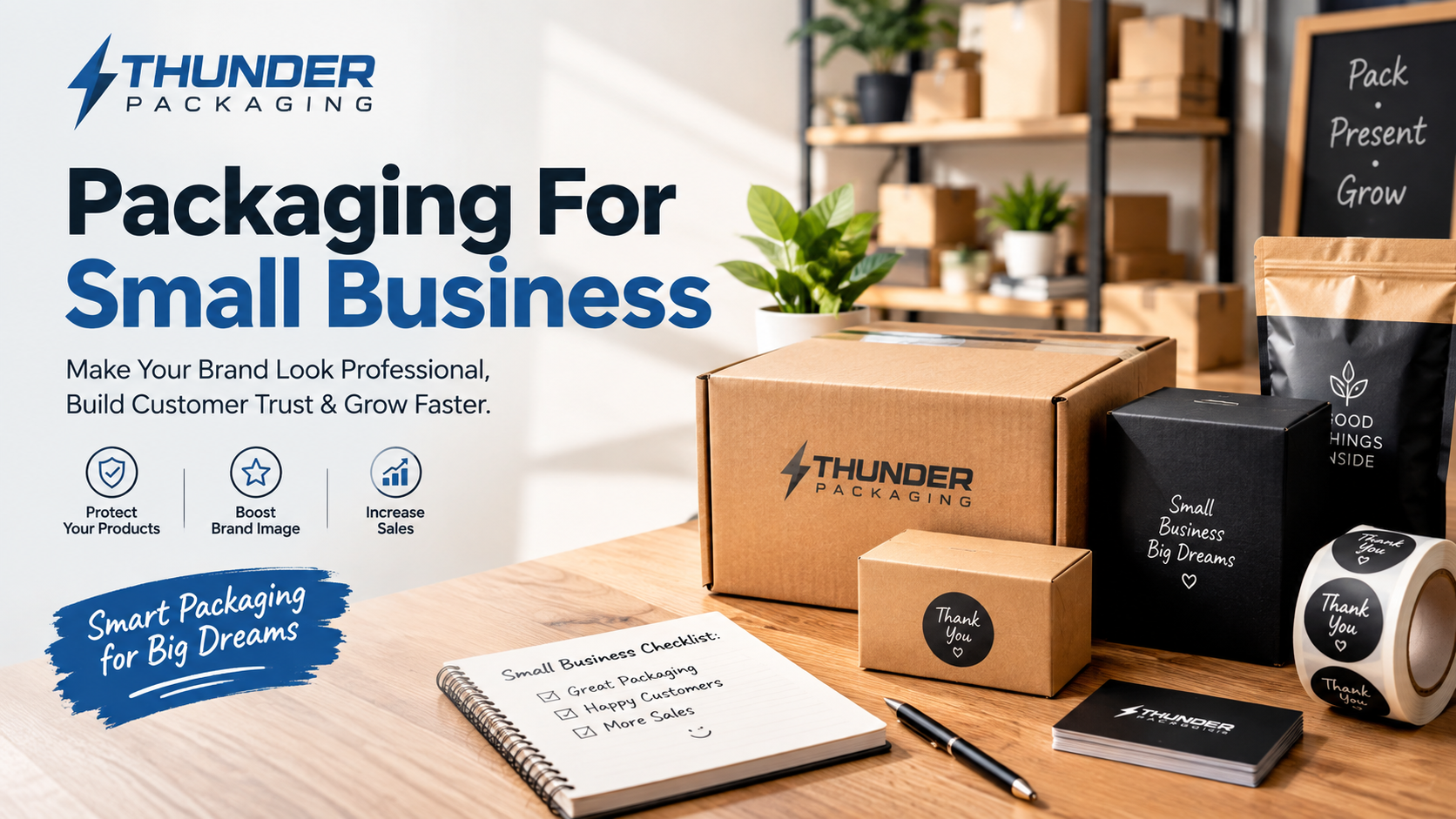
Introduction
Small businesses rarely lose customers because their packaging is too simple. They lose them because it is inconsistent — a different box for every product, a label placed slightly differently on each unit, a mailer that arrives crushed because the dimensions were never checked.
Packaging for small business is not primarily a budget problem. It is a systems problem, and systems are cheap to fix if you fix them before you print. This guide covers the structures that work at low volume, where the money should go, and how to keep every order looking like it came from the same company.
Why Small Business Packaging Fails (And It Is Rarely Budget)
Ask a customer why a small brand felt amateur and they will usually describe one of four things: mismatched box styles across a product range, improvised finishing, dimensions that clearly do not match the product, or heavy decoration on a low-cost item.
None of those require a bigger budget to solve. They require fewer variables. One board grade. Two box sizes instead of six. A single label format applied the same way every time. Consistency reads as professionalism far more reliably than a premium finish does.
Match the Structure to the Product, Not the Trend
The structure you choose should follow from what the product actually needs. Three common cases show how differently that plays out.
Soft Goods: apparel packaging and underwear packaging
Apparel is compressible, so transit protection is rarely the main concern. Presentation is. Underwear packaging in particular is judged at close range — the customer picks it up, handles it, and often opens it at home. Fit and finish matter far more than structural strength.
Folding cartons and mailers with a clean, uncluttered front panel work well here. Rigid construction is worth the cost only when the product sits at a gifting price point. For brands building this out across a range, apparel boxes in a small set of standard sizes usually outperform a unique structure per SKU.
Accessories: tie boxes and long-format structures
A necktie has one specific packaging problem: it must hold its shape along its full length without creasing. That makes length and internal support the deciding factors, not decoration.
Tie boxes in a slim rigid or folding format, with a light insert or folded collar, do this well. The same principle applies to belts, scarves, and similar long, flexible accessories — the box is doing a job that artwork cannot.
Small Items and Consumables: custom twist top boxes
For small stacked or cylindrical items, a twist closure solves a problem that tape and flaps handle badly. Custom twist top boxes open and close repeatedly without losing their shape, which suits products customers return to — small confectionery, incense, pre-rolls, vape cartridges, and similar consumables.
The tactile opening is a genuine benefit, but the practical advantage is that the box stays usable after the first open.
Five Decisions That Do Most of the Work
Decision | What to standardise | Why it matters |
|---|---|---|
Board grade | One thickness across the range | Prevents some products feeling cheaper than others |
Box dimensions | Two or three shared sizes | Fewer sizes means lower minimums and simpler storage |
Printing method | Digital for short runs | Avoids plate costs at low volume |
Print layout | Fixed hierarchy and margins | Keeps every SKU recognisable as yours |
Insert or fitment | One die-cut pattern per size | Immobilises the product and reduces transit damage |
Get these five right and most presentation problems disappear before they start.
Where Small Brands Overspend
Three purchases rarely pay off at low volume.
Too many pack sizes
Six sizes means six minimum order quantities and six sets of storage. A modular set of two or three covers most products.
Foil and specialty finishing across a full range
Metallic finishes work best as a single, deliberate accent. Applied everywhere, they raise cost without raising perception.
Custom tooling before testing
Ordering a custom die-cut structure before confirming dimensions with a physical sample is the most expensive mistake in small business packaging.
How to Make Low Volume Packaging Work
Digital printing has removed much of the traditional penalty for short runs. You can print a smaller quantity, test it in the market, and iterate without paying for plates.
Uncoated and kraft boards also suit small brands well. They accept simple one or two colour printing, hide minor imperfections, and look intentional without heavy finishing. A single-colour print on good board frequently reads better than four-colour printing on a cheap coated stock. Where structure is the concern rather than print, shipping boxes sized correctly do more for the customer experience than a branded exterior over an oversized box.
A Quick Checklist Before You Order
- Is the box sized to the packed product, not the bare item?
- Does the product move when the closed box is shaken gently?
- Are all SKUs using the same board grade and print layout?
- Can the box be opened without tools and repacked if returned?
- Have you tested a physical sample through real shipping?
- Does the label placement follow a written standard?
Final Thoughts
Looking established comes from repetition and precision, not spend. Standardise your sizes, board, and print layout, match the structure to what the product needs, and accept that simple printing done well beats complex printing done carelessly.
Start with the smallest thing you can control on every order — one box dimension, one label position — and build outward. A custom packaging partner like Thunder Packaging can help translate that system into dielines and production runs that stay consistent as your range grows.


recent posts
-
Sep 18, 2026
-
0
IntroductionSmall businesses rarely lose customers because their packaging is too simple. They lose them because it is inconsistent — a different box for every product, a label placed slightly differe...
-
Aug 03, 2026
-
0
In today's fiercely competitive marketplace, your packaging is far more than a box or a bag, it is the first physical impression your brand makes on a customer. Whether your product sits on a retail s...
-
Aug 03, 2026
-
0
In Australia today, shops and online stores have to work hard to stand out. A package is not just something that holds a product. It now shows what makes your brand different. It can make customers fe...
